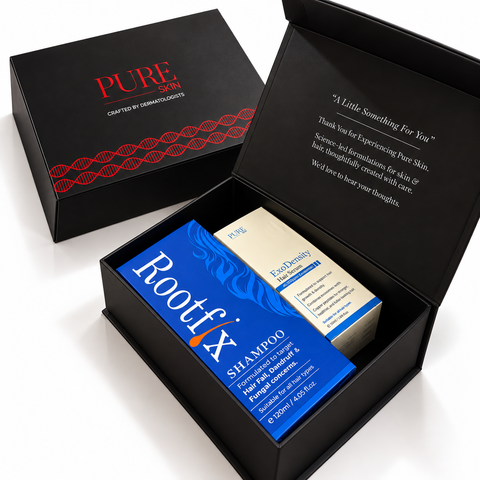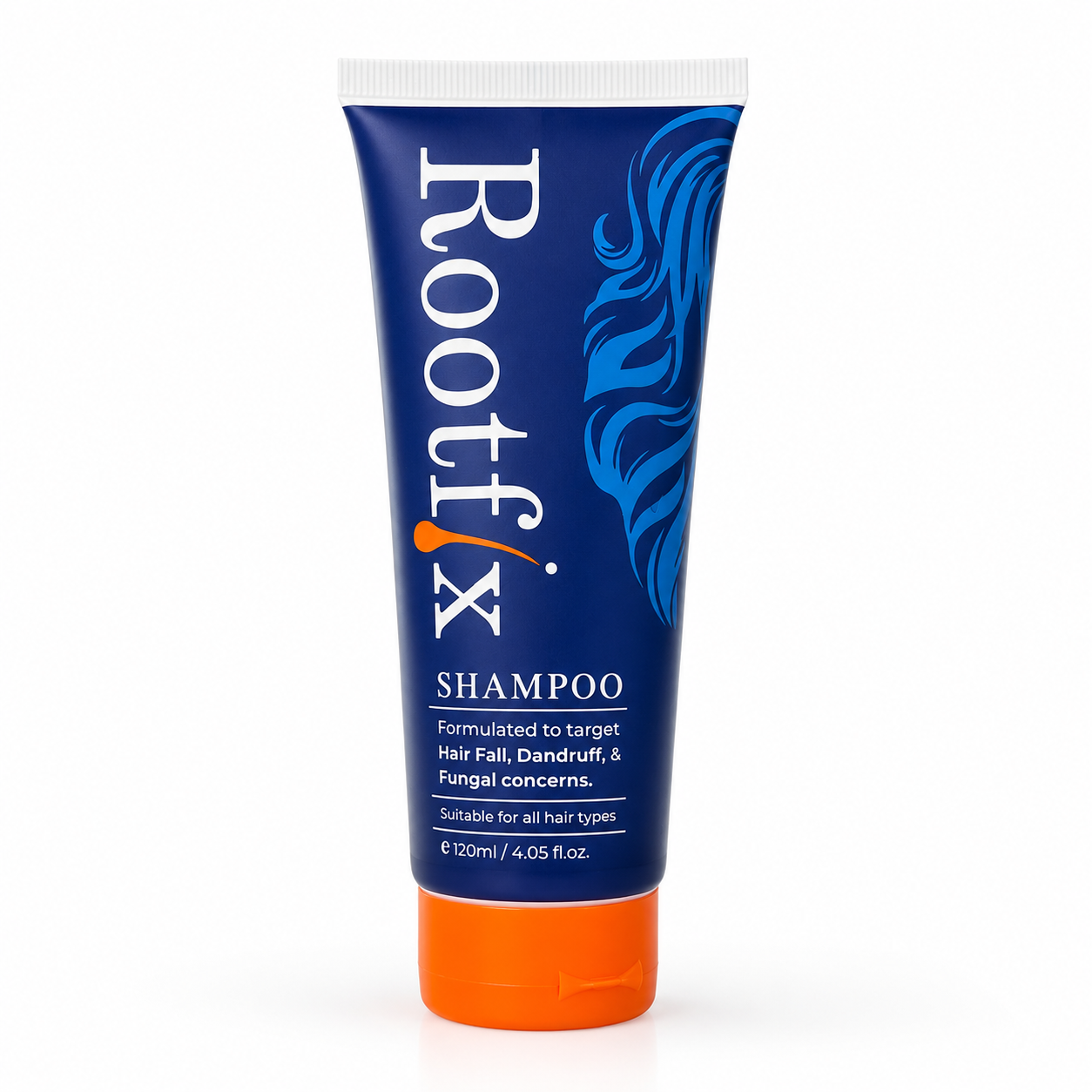


Flaking isn't dryness. It's an imbalance.
Adding moisture to a flaking scalp rarely helps, because the published research describes flaking as a shift in the scalp's own microbial community rather than a lack of water. This shampoo pairs tea tree oil, studied against the yeast involved, with saw palmetto, researched for its effect on the hormone pathway behind hair thinning. Here is what the literature describes.
Balance
Systematic review reports a shifted balance of Malassezia species and a reduced Cutibacterium-to-Staphylococcus ratio on affected scalps.1
Sebum
Malassezia breaks down sebum into free fatty acids; these irritant by-products are described as a critical factor in flaking.2
Root
Separately, saw palmetto is documented as a non-selective inhibitor of 5-alpha-reductase, the enzyme behind hormone-driven thinning.4
 Tea tree oil plant image · illustration. (Illustrations are conceptual representations for educational purposes and do not depict actual laboratory imaging.)
Tea Tree Oil
Tea tree oil is one of the few botanical anti-flaking ingredients with a human randomised trial behind it. In a 2002 study published in the Journal of the American Academy of Dermatology, 126 participants used either a 5% tea tree oil shampoo or a placebo daily for four weeks. The tea tree group showed a 41% improvement on the quadrant-area-severity score, against 11% for placebo.3
The mechanism the authors describe is antifungal: tea tree oil is documented for activity against the yeast associated with dandruff, the same organism that breaks scalp sebum into the irritant by-products behind visible flaking.3
This is why contact time matters. A shampoo that touches the scalp for ten seconds behaves like a cleanser; the trial protocol left it working on the skin.
 Saw palmetto plant image · illustration. (Illustrations are conceptual representations for educational purposes and do not depict actual laboratory imaging.)
Saw Palmetto Extract
Hormone-driven thinning is largely mediated by DHT, which the body makes from testosterone using an enzyme called 5-alpha-reductase. The fatty acids and β-sitosterol in Serenoa repens are documented as non-selective inhibitors of that enzyme.4
A 2020 systematic review in Skin Appendage Disorders examined five randomised trials and two prospective cohort studies of topical and oral saw palmetto in androgenetic alopecia and telogen effluvium, reporting positive effects across them.4
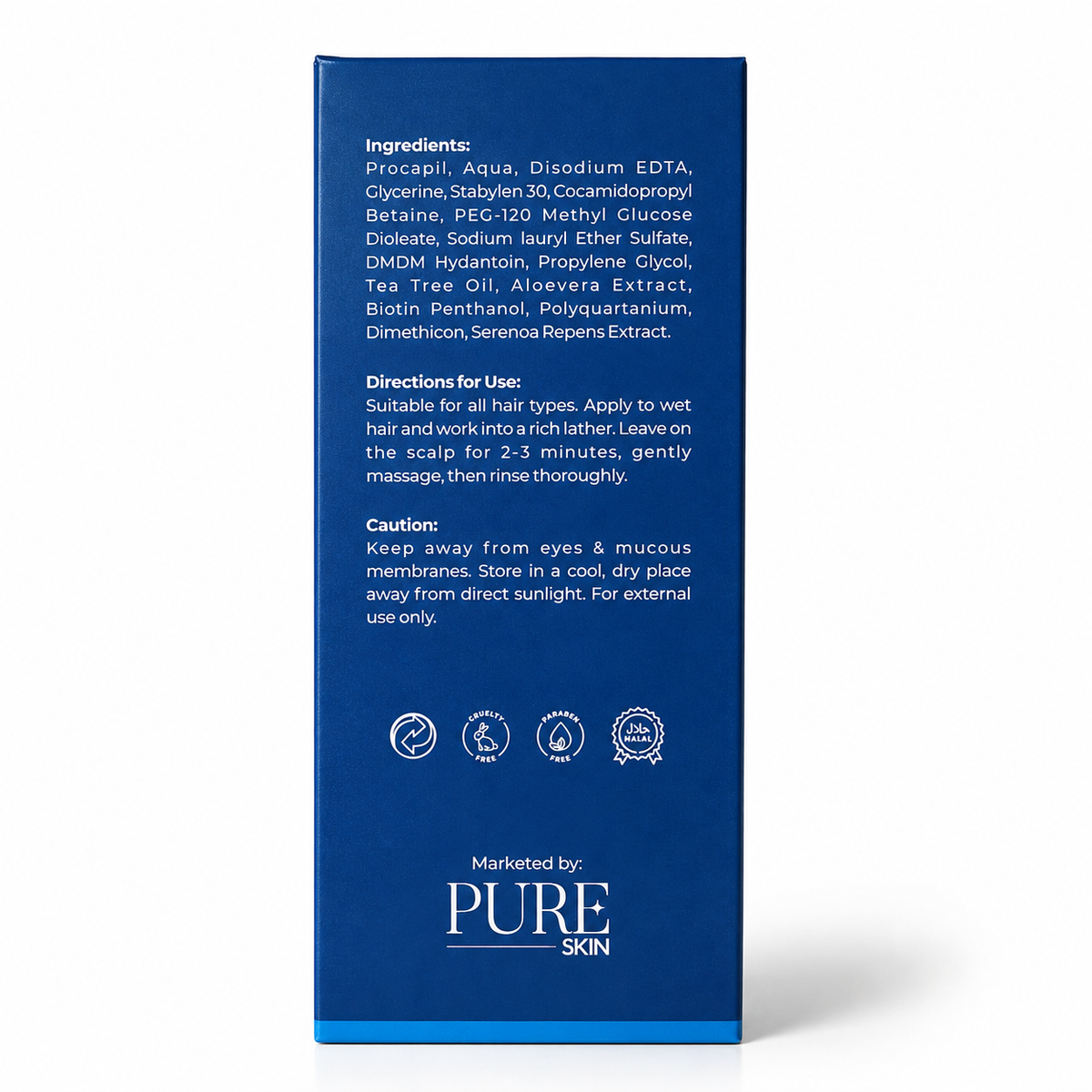
Alongside these, the formula carries Procapil, biotin and panthenol, aloe vera extract, and glycerin.
- Tao R. et al. Skin microbiome alterations in seborrheic dermatitis and dandruff: a systematic review. Experimental Dermatology, 2021. onlinelibrary.wiley.com
- Comparison of healthy and dandruff scalp microbiome reveals the role of commensals in scalp health. Frontiers in Cellular and Infection Microbiology, 2018. frontiersin.org
- Satchell A.C., Saurajen A., Bell C., Barnetson R.StC. Treatment of dandruff with 5% tea tree oil shampoo. Journal of the American Academy of Dermatology, 2002; 47(6): 852–855. pubmed.ncbi.nlm.nih.gov
- Evron E., Juhasz M., Babadjouni A., Mesinkovska N.A. Natural hair supplement: friend or foe? Saw palmetto, a systematic review in alopecia. Skin Appendage Disorders, 2020; 6(6): 329–337. karger.com
Research cited above reflects published scientific literature on the individual active ingredients used in this formula. It describes ingredient-level mechanisms, not clinical testing of the finished product. Individual results may vary.
Where it fits in your routine.
A treatment shampoo works on contact time. Rushing it is the single most common reason people conclude a shampoo doesn't work.
Wet
Wet hair and scalp thoroughly with lukewarm water. Hot water aggravates an irritated scalp.
Lather
Work into a rich lather with fingertips, not nails. It belongs on the scalp, not the lengths.
Wait
Leave on the scalp for 2–3 minutes, massaging gently. This is the step that matters.
Rinse
Rinse thoroughly. Follow with conditioner on the lengths only.
Scalp suitability
- Visible flaking
- Itchy or irritated scalp
- Oily scalp with dry-looking flakes
- Hair fall alongside scalp concerns
- All hair types
- Broken or actively irritated scalp
Results timeline
- Week 1–2Cleaner scalpScalp feels fresher and flaking begins to ease with regular washing.
- Week 3–4Calmer & balancedItchiness and dandruff reduce as the scalp environment rebalances.
- Week 6+Stronger rootsWith continued use, hair feels stronger and fall may reduce over time.
Timeframes reflect typical ingredient-level research. Individual results may vary.